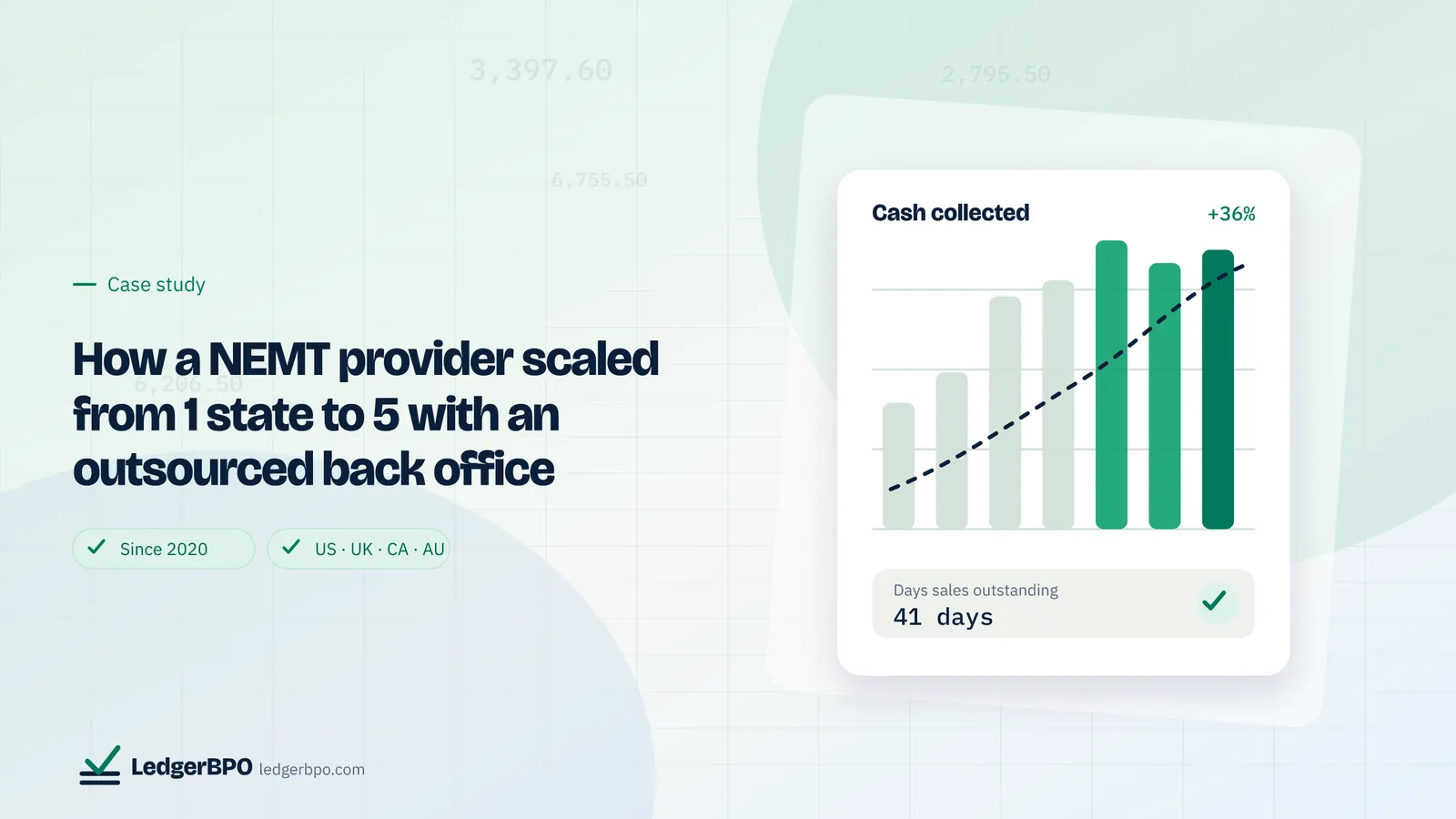
Before and after
Before
- States served
- 1
After
- States served
- 5
What we did
- 01
Access and setup
We signed an NDA and a business associate agreement, then set up named user accounts with MFA in the dispatch system, each broker portal, the clearinghouse and QuickBooks Online. Bank feeds were connected read-only. Our HIPAA-trained team worked on managed devices with no local downloads, and every login was logged. The owner kept control of payments and portal ownership throughout.
- 02
Clean-up of the existing state
Before adding states, we matched the trip log to submitted claims and found trips that had never been billed, or had been denied and left unworked. Those inside the timely-filing window were corrected and rebilled. Broker remittances were matched to bank deposits, and the accounts receivable ledger was rebuilt by broker and by aging bucket so the owner could see what was actually collectable.
- 03
A repeatable billing cadence
We set a daily routine: completed trips were checked against the broker's trip authorization, coded and submitted within the window the owner agreed. Rejections were worked the next business day. Every Friday the team lead reviewed aging by broker, and each month closed under our Two-Tier Review, with a checker signing off the reconciliation before the owner saw the reports. When a new state contract started, the same checklist was copied and adjusted for that broker's rules.
- 04
Insurance follow-up calls under the provider's brand
Our BillingLine desk called brokers and managed-care plans on unpaid and denied claims, using the provider's name and a script the owner approved. Each call, reason code and promise-to-pay date went into our DunningDesk log. Agents never handled card data; any patient co-pay went through the provider's own payment link. Call recording followed the rules of each state the provider operated in.
- 05
Reporting by state
Through our LedgerDesk portal the owner received a monthly pack showing revenue per trip, denial rate and days to payment for each broker and each state. That view made it clear which contracts were worth renewing before the next one was signed. The provider's fleet and dispatch stayed with its own team; LedgerBPO covered billing, follow-up and the books.
KPIs
| KPI | Before | After |
|---|---|---|
| States served | 1 | 5 |